
Is My Child Ready for Gymnastics?

The 5 Signs Parents Often Miss
You watch your child bounce off the walls, cartwheel across the living room (accidentally knocking over a lamp), and spin in circles until they collapse laughing. If you've been wondering 'is my child ready for gymnastics?', you're not alone."
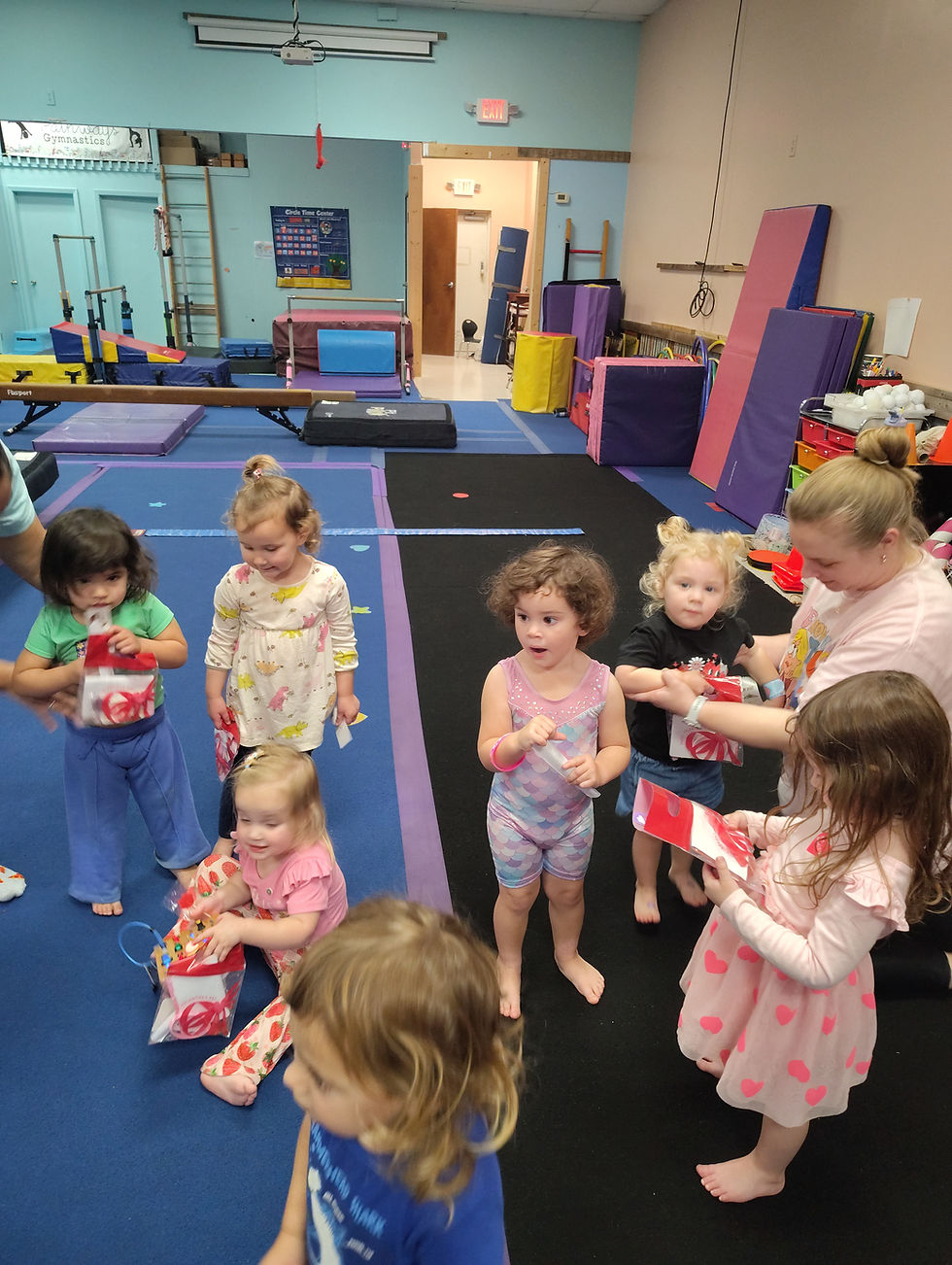
It's a question a lot of Bastrop parents ask us. And the honest answer is: your child is probably more ready than you think.
At Pathways Gymnastics, we welcome children starting from birth — yes, really — all the way through age 16. We've seen hundreds of first-time students walk through our doors, and over the years we've noticed patterns that signal a child is absolutely primed to thrive in class.
Here are the 5 signs parents often overlook, plus what to do if you're still on the fence.
Sign #1: They Can't Stop Moving
Does your child seem physically incapable of sitting still? Do they jump off furniture, roll across the floor, or turn every flat surface into a balance beam?
That's not a behavior problem — that's a child whose body is craving structured movement. Young children between the ages of 2 and 6 are in a critical window for developing gross motor skills: balance, coordination, spatial awareness, and body control. Their brains are literally wired to learn through movement at this stage.
Gymnastics channels that energy into purposeful skill-building. Instead of leaping off the couch, they're learning how to jump safely, land with control, and roll without hurting themselves — skills that will serve them in every sport and activity for the rest of their lives.
Coach Tip: If your child can't seem to stop moving, that's a superpower in the gym. We love that energy and know exactly what to do with it.
Sign #2: They Love to Pretend and Use Their Imagination
This one surprises parents. What does imagination have to do with gymnastics?
At Pathways, our classes for young children are designed around creative play. We use music, themed activities, and storytelling to guide kids through movement. A child who loves pretend play — who can 'become' a frog jumping on lily pads or a superhero flying through the air — picks up on our class structure incredibly fast.
This imaginative engagement also supports cognitive development. Research from early childhood education consistently shows that children learn physical skills faster when they're embedded in play-based, narrative contexts. So if your little one has a vivid imagination, they're going to absolutely love our approach.
Parent Note: Our classes are not drills and repetition. They're adventures. If your child loves pretend play, they'll feel right at home.
Sign #3: They Show Interest in Other Kids (Even If They're Shy)
You don't have to have an outgoing, fearless child to start gymnastics. In fact, some of our most incredible transformations have been with shy, hesitant kids who needed a safe space to open up.
The sign to look for isn't boldness — it's curiosity. Does your child watch other kids playing and seem interested, even if they hang back? Do they ask questions about what other children are doing? Do they light up when they get positive attention from a kind adult?
That curiosity is enough. Our coaches are trained to meet every child where they are. We never force participation, never put kids on the spot, and always celebrate every small win. A shy child who watches quietly in week one is often cartwheeling with new friends by week four.
Real Talk: We've had children who sat on the edge of the mat for two full classes before jumping in — and then never wanted to leave. Every child moves at their own pace, and that's completely okay.
Sign #4: They're Starting to Show an Interest in 'Tricks'
Have you caught your child attempting a somersault in the living room? Trying to do a handstand against the wall? Spinning and asking 'did you see that?!'
When children start attempting gymnastic-style movements on their own, it's a clear signal that their bodies are ready to explore those skills in a safe, coached environment. The challenge with self-taught 'tricks' at home is that without proper technique, kids can develop habits that lead to injury or make it harder to learn correct form later.
Starting in a structured class early means they learn to do these movements properly from day one — on padded mats, with spotting, and with coaches who know exactly how to build skills progressively and safely.
• Forward rolls with proper tuck and chin position
• Cartwheels with correct hand and foot placement
• Jumps with safe landings — knees bent, feet together
• Balancing on beams with correct arm and core engagement
The earlier they learn right, the better their foundation for everything that comes after.
Sign #5: You've Noticed Them Watching Gymnastics and Lighting Up
Maybe they stopped everything to watch Olympic gymnastics on TV. Maybe they've asked you what that 'flippy thing' is called. Maybe they pointed at a gymnastics video on YouTube and said 'I want to do that.'
When a child is drawn to something — when their eyes go wide and their body leans forward — that's intrinsic motivation. And intrinsic motivation is one of the most powerful predictors of a child sticking with an activity, building confidence in it, and genuinely thriving.
You don't have to wait for them to be 'athletic enough' or 'coordinated enough.' Those qualities are developed in class, not prerequisites for joining. The only requirement is that spark of interest — and if you've seen it, that's your sign.
From Our Coaches: We've never had a child walk out of their first class wishing they hadn't come. Curiosity is all it takes to get started.

Bonus: What If They're Nervous or Have Sensory Needs?
Some children need a little more time, gentleness, or a specially designed environment to feel comfortable in a new setting — and that's completely valid.
At Pathways Gymnastics, we offer our Spirited Child class specifically designed for children with sensory processing differences, neurodivergent kids, or those who simply need a slower, more supported introduction to movement. The class keeps groups small, minimizes overwhelming stimuli, and allows each child to build trust at their own pace.
If you're not sure whether traditional classes or our Spirited Child class is the right fit, just reach out. We'll talk it through with you and help you find the best starting point for your child.
So When Is My Child Ready for Gymnastics?
The short answer: earlier than most parents think.
At Pathways Gymnastics, we welcome children from birth through our Grown Up & Me class, where parents and babies experience guided movement together. From there, our programs grow with your child all the way through age 16.
Age 0–18 months: Grown Up & Me — sensory movement and bonding with a parent or caregiver
Age 18 months – 3 years: Toddler classes focused on basic movement, coordination, and social skills
Age 3–5 years: Preschool gymnastics — structured play, foundational skills, creative movement
Age 5+: Beginner and progressive classes in gymnastics, acro, and tumbling
There is no magic age. There is only the right moment for your child — and if you've read this far, that moment is probably now.
Ready to Take the First Step?
If you saw your child in any of these 5 signs, we'd love to meet them. At Pathways Gymnastics in Bastrop, TX, we make first classes easy, welcoming, and fun — for kids and parents alike.
Come see the gym, meet our coaches, and watch your child discover what their body can do.
Enroll today at pathwaysgymnastics.com or call us at 512-829-3547 (512-829-FLIP).


Comments