
Movement and Gymnastics for Kids: The Science Behind Early Training in Bastrop, TX

Have you ever watched a toddler discover they can jump? That pure joy on their face isn't just adorable, it's their brain literally rewiring itself with every bounce. As parents in Bastrop, Texas, understanding why certain activities benefit our children can transform how we approach their development.
Movement and gymnastics for kids isn't about creating Olympic athletes. It's about giving developing brains and bodies exactly what they need during the most crucial years of growth. Scientific research shows how structured movement shapes physical abilities, cognitive function, emotional resilience, and sets the foundation for lifelong health. At Pathways Gymnastics in Bastrop, TX, we use this understanding to create programs that support your child's complete development.
Let's explore why movement matters so much and how gymnastics supports your child's growth.

Why Movement Matters for Your Child's Brain
The connection between physical activity and brain development is profound. When children move, they're not just building muscles, they're building neural pathways that support learning, memory, and attention.
Neuroplasticity refers to the brain's ability to form new connections, and it's at its peak during childhood. Every time your child practices a movement pattern, whether it's a forward roll or walking across a balance beam, their brain creates and strengthens neural pathways.
Research shows that physical activity triggers the release of brain-derived neurotrophic factor (BDNF), a protein that supports neuron growth and new connections. Dr. Autumn Ivy, a pediatric neurologist, explains that movement stimulates blood flow to developing brains, supporting synaptic growth during critical growth periods.
A comprehensive review of sport-based interventions found that both aerobic and skill-based exercise in children improves cognitive function, including attention and memory. This means that movement and gymnastics for kids programs can support academic success and learning ability.
The Physical Benefits: Building Strong, Capable Bodies
Beyond brain development, gymnastics creates fundamental physical capabilities that serve children throughout their lives.
Motor Skills and Coordination
Research tracking young children in recreational gymnastics programs shows remarkable results. A six-month study found that children enrolled in gymnastics improved their motor proficiency significantly more than peers who didn't participate. Another nine-week intervention showed measurable improvements in strength, flexibility, coordination, and power.
Children with gymnastics experience also develop better proprioception, the body's ability to sense its position in space. This "body sense" affects everything from handwriting to playground safety.
Balance and Posture
Gymnastics systematically develops balance through structured progressions. Children learn body control that transfers to every activity, from riding bikes to participating in team sports. The core strength built through gymnastics naturally supports good posture, which affects breathing, concentration, and confidence.
Long-Term Health Foundations
As weight-bearing exercise, gymnastics builds bone density during the critical years when peak bone mass is being established. The muscle development and flexibility gained in childhood create foundations for lifelong physical capability and injury prevention.
Cognitive Development Through Movement and Gymnastics for Kids
The cognitive benefits of gymnastics go far beyond what most parents expect.
Memory and Executive Function
An eight-week gymnastics training program showed positive effects on children's spatial working memory and related brain activity. Executive functions, including planning, attention, impulse control, and cognitive flexibility, all improve through regular physical activity.
Think about what happens in a gymnastics class: children watch demonstrations, remember sequences, plan movements, execute skills while monitoring their position, and adjust based on feedback. This intensive exercise of working memory and executive function can support school performance.
Better Focus and Academic Performance
Parents in Bastrop often report that their children become more focused and attentive after starting gymnastics. This isn't coincidental, physical activity increases blood flow to the brain, triggers neurotransmitters that support alertness, and over time, can positively impact brain structure in regions associated with memory and learning.
Multiple studies link physical activity to improved attention and academic performance in school-aged children.
Emotional and Social Growth
Physical competence builds emotional confidence. When children master challenging skills at Pathways Gymnastics, they experience genuine achievement that creates intrinsic confidence, not based on external validation, but on real capability.
Gymnastics also teaches resilience. Every gymnast falls, wobbles, and makes mistakes. Learning to persist through challenges in the gym can transfer to academic challenges, social situations, and life obstacles.
Group classes provide natural opportunities for social learning. Children practice taking turns, following instructions, celebrating peers' successes, and working together. These social skills prepare them for classroom environments and peer relationships.
Research also shows that regular sports and movement activities are linked to reduced anxiety and depression symptoms in children while building healthy coping mechanisms.
How Pathways Gymnastics Supports Development in Bastrop
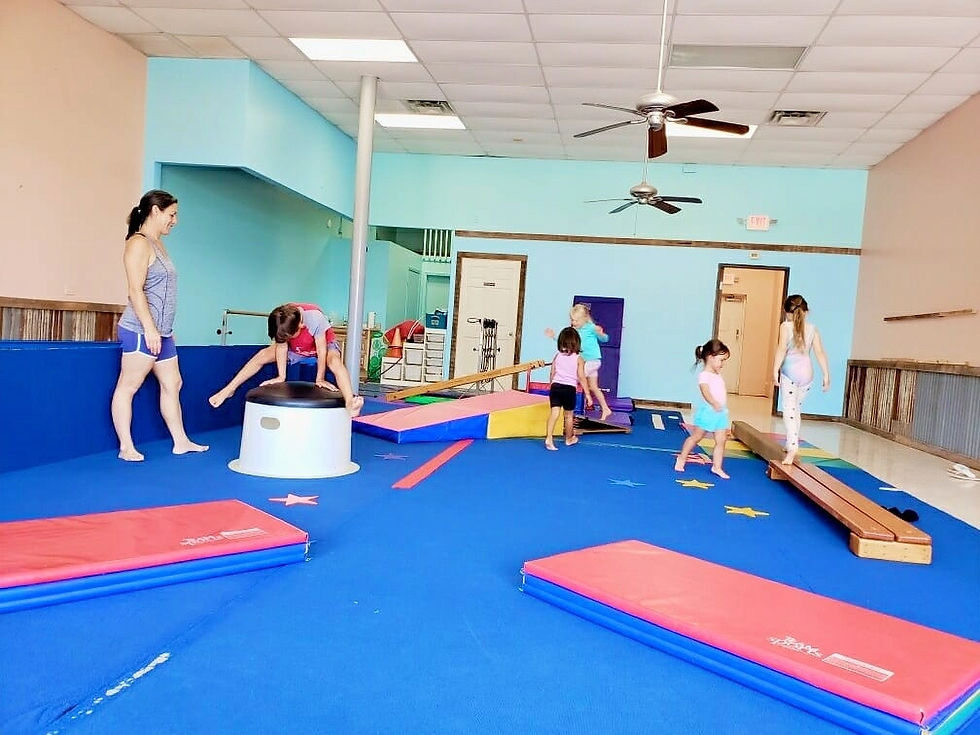
At Pathways Gymnastics in Bastrop, TX, we design classes with child development in mind.
Structured progressions ensure children build from fundamental movement patterns to complex skills in alignment with how their neuromotor systems mature. Research shows that structured, guided movement produces better outcomes than unstructured play alone.
Small class sizes allow for individual attention, correction, and feedback, essential for proper skill development and safety.
Age-appropriate activities match each developmental stage, challenging children appropriately without overwhelming them.
Fun and engaging format keeps kids motivated and excited about movement, which is key to consistent participation and long-term benefits.
Answering Common Parent Questions
What is the best age to start gymnastics? Most programs accept children as young as 18 months for Grown up & ME! classes. For independent classes, ages 3 to 5 are ideal when children can follow instructions and separate comfortably from parents.
Should I put my 5 year old in gymnastics? Absolutely! Five is an excellent age to start. Children at this age have developed enough body awareness and attention span to thrive while being in a critical period of motor skill development.
Can a 7 year old do gymnastics? Yes! Seven is still a great age to begin. Children starting at this age often progress quickly due to better body control and longer attention spans. They gain all the same physical, cognitive, and emotional benefits.
Learn more about our different programs

Supporting Movement at Home
The benefits of gymnastics multiply when movement continues at home. Even 10 to 15 minutes of guided movement play daily makes a difference.
Create simple obstacle courses, practice balance walks, or play movement games. Ask your child's coach Cookie about skills they're working on and try simplified versions at home.
Celebrate effort over perfection. Research shows that praising process builds better persistence and resilience than just praising outcomes.
Take advantage of Bastrop's beautiful parks and outdoor spaces for active family time. When children see parents valuing movement, they internalize these attitudes.
The Long-Term Investment
The foundations built through movement and gymnastics for kids extend far beyond childhood. Children who experience competence in physical activity are more likely to maintain active lifestyles as adults. The movement patterns, body awareness, and confidence gained in youth support health and capability for decades.
Gymnastics is often called the "foundation sport" because the skills it develops, balance, coordination, strength, flexibility, spatial awareness, and body control, transfer to virtually every other sport and physical activity.
Building Strong Kids in Bastrop
Movement during early childhood is fundamental to healthy development. The neural connections formed, motor patterns established, and cognitive skills developed through structured programs like gymnastics create foundations that support children throughout their lives.
At Pathways Gymnastics in Bastrop, TX, we focus on supporting whole-child development during these critical years. Every class is designed with child development in mind, every progression follows age-appropriate principles, and every interaction aims to build confident, capable, healthy children.
When children move well, they often think better, feel more confident, and develop the resilience to face life's challenges.
Are you ready to give your child these benefits? Visit Pathways Gymnastics in Bastrop and join us in nurturing the next generation of strong, capable children.
Ready to get started? Check out our programs and schedule your child's first class today.
Comments